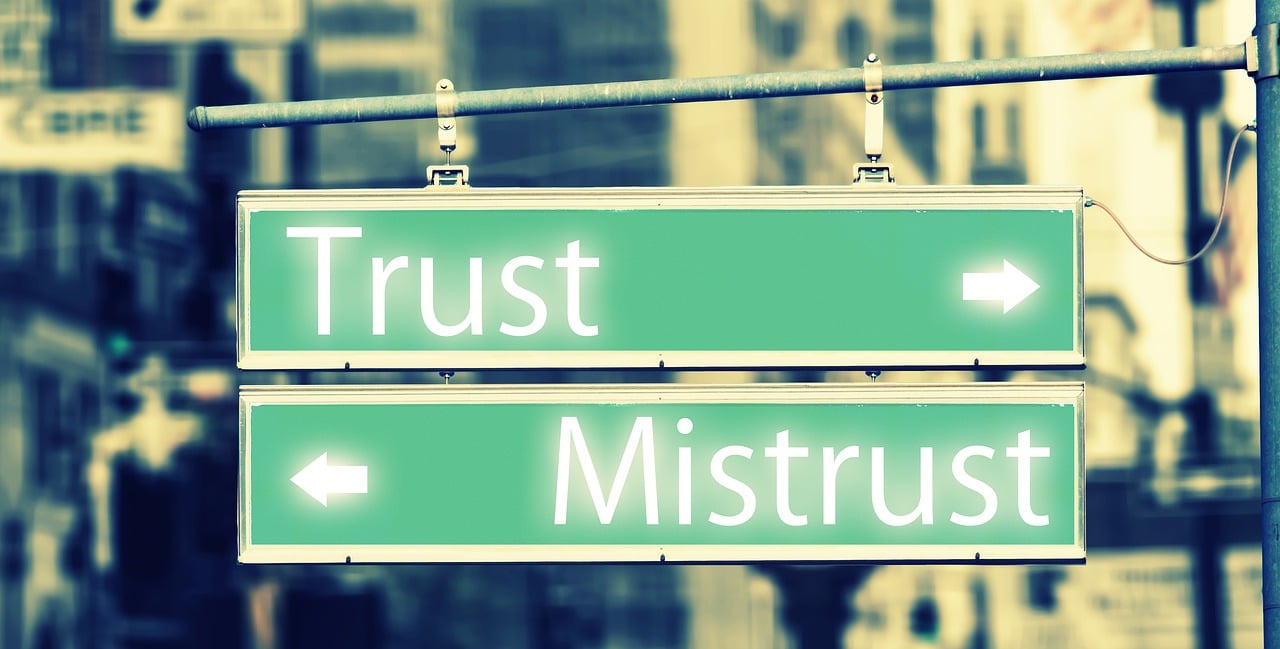
We’ve all heard a version of this: “The worst time to find out whether people trust you is when you need them to.”
But that is exactly what happens in a crisis. Something goes wrong, the situation starts moving faster than anyone would like, and suddenly the organization needs people to believe it.
At the same time, partners, investors, regulators, and everyone else watching need some reason to believe that what the organization says next is credible.
It’s at this moment that we can typically cue the crisis communications gears to turn on.
The crisis team assembles, legal starts reviewing language, communications drafts a statement, and leadership debates whether the CEO should speak publicly.
Eventually, someone asks the question everyone is trying to answer: “What do we need to say to restore trust?”
It sounds like the right question. Unfortunately, it isn’t.
The statement matters, the spokesperson matters, timely responses matter, and empathy matters. But none of those things can manufacture trust that didn’t exist yesterday. More than likely, the people watching the crisis are not meeting the organization for the first time. At least the ones the organization needs aren’t.
They are bringing years of experiences, headlines, interactions, promises, decisions, and relationships into that moment. They remember whether the company has been transparent when transparency was inconvenient.
So while the organization is looking forward, trying to figure out what to say next, everyone else is looking backward. They are asking themselves whether what they are hearing now is consistent with everything they have seen before.
That is the uncomfortable truth about trust in a crisis. By the time the statement is drafted, most stakeholders have already decided how much of it they are willing to believe.
We know trust is built over time. We know one well-written statement can’t erase years of bad decisions, inconsistent behavior, or weak relationships.
And yet, when organizations prepare for a crisis, that knowledge sometimes seems to disappear.
Think about what typically goes into crisis preparedness. We build response plans, establish escalation procedures, identify spokespeople, develop holding statements, conduct media training, create monitoring systems, and map out who needs to be in the room when something goes wrong.
If an organization has done all of that, it is already ahead of plenty of others. Forrester’s 2025 research found that only 49% of smaller companies have a documented crisis communications plan, compared with 77% of large organizations.
Those things matter. But notice what most of that preparation is designed to do. It helps the organization respond and react. It does not necessarily help the organization be believed.
That’s an important distinction because speed, coordination, and message discipline can only take you so far. An organization can execute its crisis plan perfectly and still discover that employees are skeptical, customers are angry, reporters question every assertion, and outside voices are filling the information vacuum with a very different version of events.
That doesn’t mean the crisis plan failed. It may mean the organization prepared for the wrong test.
We spend a crazy amount of time preparing for what an organization will do and say when the pressure arrives. Far less attention goes to understanding what stakeholders will bring into that moment with them.
And if you’ve been in a crisis over the last few years, you know they never arrive empty-handed.
What stakeholders bring with them is history.
They bring every interaction they’ve had with the organization, every promise they remember, every headline they’ve seen, every experience they’ve had as an employee, customer, partner, investor, regulator, or member of the community.
And when something goes wrong, all of that history gets put under pressure.
A crisis does not give an organization a clean slate. It does the opposite. It forces people to test what the organization is saying now against what they already believe to be true.
They may not consciously run through a checklist, but the questions are there:
That is why two organizations can make almost identical statements during similar crises and receive very different reactions.
One may be given time to explain. The other may be assumed guilty before the facts are fully known. One may have employees defending leadership internally, and the other may have screenshots, anonymous quotes, and internal messages appearing online before the first press conference begins.
The difference is not always the crisis response itself. Often, it is the credibility the organization carried into the crisis.
This is why a crisis is less of a reputation reset and more of a stress test. It exposes where trust is strong, where it is fragile, and where it may have already disappeared long before anyone declared a crisis. Because when uncertainty is high, people reach backward for evidence.
The crisis may be happening in real time, but trust is almost always evaluated retrospectively.
If a crisis is a stress test, then trust is one of the assets being tested. And like most valuable assets, it is built over time.
Organizations make small deposits into trust every day, often without thinking about them at all. They are transparent when they could have stayed quiet. They acknowledge mistakes before someone forces them to. Leaders explain difficult decisions instead of hiding behind corporate language. Employees see that what is said internally matches what is said publicly. Customers watch promises get kept. Journalists and other credible third parties see the organization behave consistently enough that its words begin to carry weight.
None of those moments feels especially dramatic, and that’s precisely the point. Trust is usually built in ordinary moments, when there is no spotlight, no countdown clock, and no immediate reputational threat.
The withdrawals can be just as incremental. An executive overpromises, a company avoids a difficult question, employees see a gap between stated values and actual behavior, or a customer complaint is ignored.
One moment rarely destroys trust on its own, but enough of them change the balance.
Then the crisis arrives. Suddenly, the organization is asking for a much larger withdrawal than usual. And that is where the balance sheet matters.
An organization that has consistently made deposits may have room to make a mistake, explain what happened, and still be heard. One that has been spending trust for years may discover there is very little left when it needs it most.
You cannot withdraw trust that was never deposited in the first place.
This is also why organizations spend far too much time searching for the perfect apology.
We analyze tone, timing, body language, word choice, and whether an apology sounds sufficiently human. And we should, because those details matter. But there is no combination of words that can outrun an organization’s history.
Look at Boeing after the January 2024 Alaska Airlines incident, when a door plug blew out of a 737 MAX 9 shortly after takeoff.
Then-CEO Dave Calhoun did many of the things we typically tell leaders to do in a crisis. He acknowledged the company’s mistake. He promised transparency, and later that month, he went even further and said, “We caused the problem.”
But Boeing was not delivering those words into a vacuum.
People were hearing them through the experience of the two fatal 737 MAX crashes in 2018 and 2019, years of scrutiny over the company’s safety culture, previous promises to change, and continuing concerns about manufacturing quality.
So the question was never simply, “Is this a good apology?” It was also, “Do I believe Boeing this time?”
That is a much harder communications problem. A well-handled apology can absolutely help an organization take responsibility, demonstrate empathy, explain what happens next, and begin repairing damage. But an apology is not a reset button; it is interpreted through the credibility of the person and organization delivering it.
The same words can sound sincere coming from an organization with a deep reserve of trust and calculated coming from one whose credibility is already depleted.
In a crisis, the best statement in the world can help you use the trust you already have. It cannot create a balance that isn’t there.
If all of that is true, then we probably need to rethink what we mean when we say an organization is “crisis ready.”
A crisis plan is part of it. So are escalation protocols, media training, monitoring, decision-making authority, and clear roles. Those things help an organization move faster and with less confusion when the pressure hits.
But readiness cannot stop at the mechanics of response. It also has to account for the condition of the organization before anything goes wrong.
That means asking harder questions than who approves the statement or who gets the first phone call. We have to dig deeper:
That last question may be more useful than another round of holding-statement exercises, because it forces the organization to look beyond response preparedness and toward reputation preparedness. It reveals where relationships are thin, where credibility is borrowed from a handful of people, where leadership visibility is inconsistent, and where the organization may be relying on communications to solve a problem that actually lives somewhere else.
A crisis plan tells you what to do when the moment arrives. Crisis preparedness tells you what kind of organization will be standing there when it does.
But be careful, because this is also where crisis communications can become a convenient catch-all for problems it did not create.
A bad operational decision gets made, employees lose confidence in leadership, customers are frustrated by an experience that has nothing to do with messaging, or a business decision contradicts what the organization has been saying publicly for years. Then the issue becomes visible, and communications is asked to fix the trust problem.
That is not how trust works.
Communications has an important role to play. We help organizations explain decisions, surface risks, understand stakeholders, build relationships, create transparency, and connect what the organization says with what people actually experience.
But we cannot manufacture credibility for behavior that contradicts the message. That distinction matters because trust is created across the entire experience someone has with an organization.
It comes from leadership behavior, employee experience, customer service, business decisions, community relationships, the quality of the product or service, and the credibility of the people willing to speak on the organization’s behalf.
Communications connects many of those pieces, and it can help make them visible, consistent, understandable, and credible.
But it cannot substitute for them. Trust is not simply a communications outcome; it is an organizational outcome that communications helps create, demonstrate, and protect.
So what does all of this actually buy you?
Not immunity from criticism or a free pass. It’s certainly not permission to make bad decisions and expect people to forgive you.
What it can buy you is something much more valuable in the middle of a crisis: the benefit of the doubt.
When the facts are incomplete, when information is moving quickly, and when people are trying to make sense of what happened, that can be critical.
It is the difference between a journalist treating every statement with suspicion and one who says, “They’ve been straight with me before. I’ll take the call.”
That is what trust looks like in practice. It does not guarantee that people will agree with you, and it does not protect an organization from accountability.
But, organization have a chance to be heard before everyone decides what they believe. That may not sound dramatic, but during a crisis, it is one of the most valuable things an organization can have.
Because when the situation is moving faster than the facts, the organizations that have earned credibility do not start at zero. They start with people willing to listen.
That is why the most important crisis communications work rarely looks like crisis communications at all.
It happens in the ordinary moments: the difficult decision that gets explained clearly, the mistake that gets acknowledged quickly, the employee concern that gets taken seriously, the customer issue that gets fixed, the reporter who gets a straight answer, the promise that actually gets kept.
Those moments may not feel consequential when they happen, but they are. Because when the crisis eventually comes, the organization will not get to decide how much trust it has.
Everyone else will; by then, the answer will already have been earned.