You can’t win a pitch you never knew you were in. And you can’t win if you’re not included.
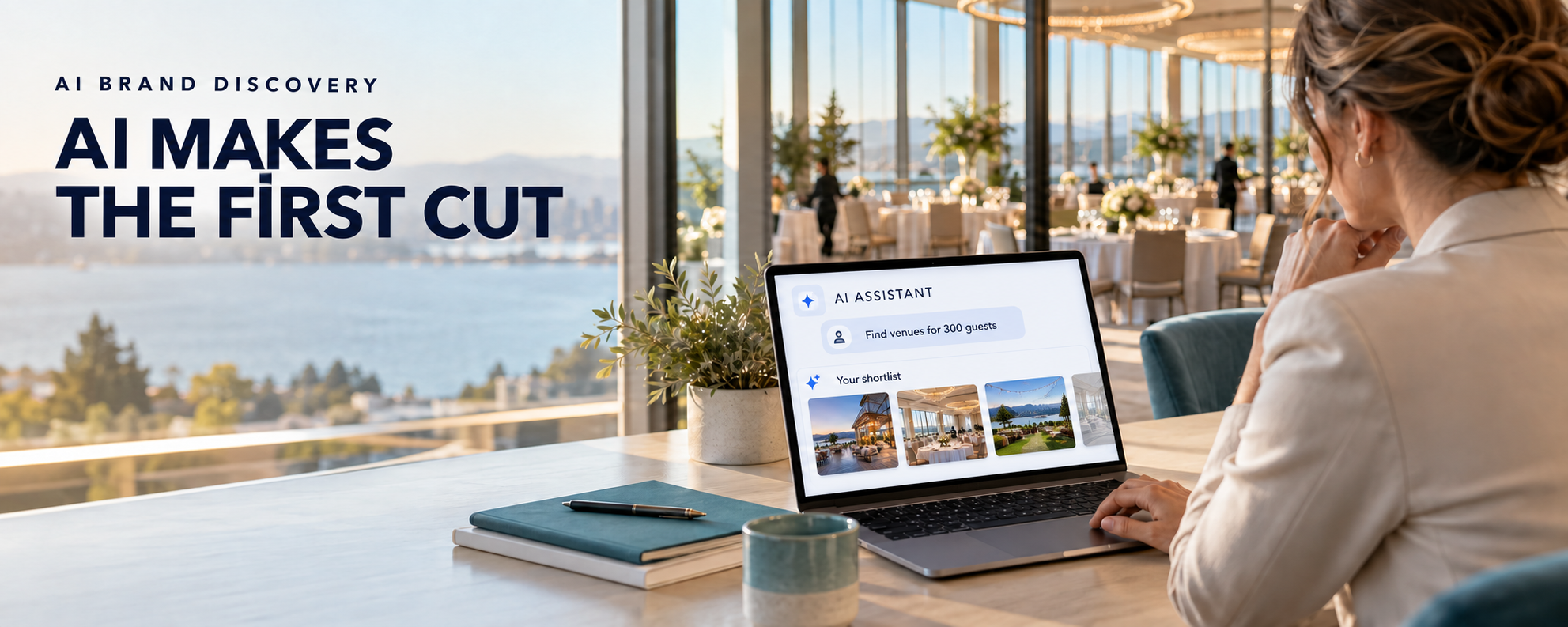
More and more, that’s a question for the machines, not the customers, because your next customer may ask AI to make the first cut.
Let’s say an event organizer needs a venue for 300 people. It has to fit the budget, accommodate attendees with disabilities, support a mix of presentations and smaller sessions, and have technology that works when 300 people need it to work.
The organizer could open a dozen tabs and start making a spreadsheet. Instead, she asks an AI assistant to find suitable venues, compare them, and flag anything she should verify before booking.
A few minutes later (instead of a few days later), she has a shortlist. One venue comes with a warning: its website says it can accommodate 300 people, but another listing says 250. A second venue doesn’t appear at all, but the planner has no idea. So, they start calling the venues that made the list.
None of them delivered a pitch, and the venue that was left out may never know it was considered.
I get that not everyone is in event planning, but the question it raises applies far beyond just that. A customer comparing technology providers, agencies, healthcare services, or travel options can now ask an assistant to do much of the early sorting.
This is all time that brands previously had to generate exposure with those customers. Now, by the time they reach your website, they may already have a recommendation, as well as a list of doubts.
What that means for you is that your next first impression may happen in a conversation your brand isn’t part of. We’ve built much of our digital presence around the moment someone clicks through. That moment may no longer be where the decision begins.
The organizer in our example hasn’t handed over the entire decision. They still have questions to ask, calls to make, and a venue to visit. But she has handed AI a meaningful part of the work—deciding which places are worth her time in the first place.
That’s already a familiar way to use conversational AI. In a 2026 Pew Research Center survey, searching for information was the most commonly reported use of chatbots: 42% of U.S. adults said they use them for that purpose.
People can describe what they need, add preferences, ask for comparisons, and refine the results as they go. According to Google, the average search in AI Mode is three times as long as a traditional search query. That means people are giving the system more context because they want more than a list of links.
As AI agents become capable of taking more steps on someone’s behalf, that early research may lead further into the decision. We don’t have to pretend every customer is delegating a purchase today to see what’s changing. The first round of evaluation can happen before a brand knows the customer is looking.
And if the organizer does visit a venue’s website, they probably aren’t starting with “What is this place?” They may be checking whether the rooms really hold 300 people, whether the accessibility information is specific enough, or why the assistant flagged a concern.
Too often, we’re still designing our content and experiences as though every customer begins with us. In Adobe’s 2026 consumer research, about a quarter of respondents named AI platforms among the sources they use most often to research information, make purchase decisions, or find recommendations.
Traditional search still leads, but customers have more ways to enter the conversation, and some will reach us well into their decision. The funnel may still be useful for reporting, but it’s a lot less useful as a map of how every customer actually gets there.
So, the question has to be asked: If an assistant is helping decide which venues deserve a closer look, what information is it using to make that call?
Back to our event organizer.
To make a useful shortlist, the assistant needs more than a venue’s name and a gallery of beautifully lit ballrooms. It needs to know which spaces can hold 300 people, how smaller sessions would work, what accessibility features are available, and whether the technology can support the event.
Some answers may come from the venue’s website. Others may come from event listings, reviews, coverage, or people who have held events there. Depending on the tool and the question, the assistant may draw from different sources. Or worse, miss useful information altogether.
Again, the same is true outside event planning. If someone asks AI to compare technology providers or agencies, it needs to understand who each one serves, what they actually do, what claims they make, and what evidence supports those claims.
A tagline can tell it how you want to be seen. But, it can’t answer every question a customer has about choosing you.
That’s the next step in the argument I made in You Still Can’t Buy Your Way Into AI Relevance. Getting in front of a potential customer is one thing. Giving an assistant enough substance to make a useful case for your organization is another.
So, here’s the question I’d put to any communications or marketing team: If an AI agent investigated your organization today, would it find enough clear, credible, and consistent evidence to recommend you?
You don’t answer that by writing copy that sounds like it was composed for a machine. You answer it by making useful information easy to find, keeping it current, and ensuring the story holds together wherever someone (or something) looks.
That last part is often where things get interesting.
Take the venue with the conflicting capacity numbers.
Perhaps the ballroom holds 300 for a reception, but only 250 when everyone needs a seat and a view of the stage. The events team knows that, and it’s probably explained on every sales call.
The organizer hasn’t had a sales call, so now the assistant has two numbers and no explanation for the difference.
Now add the other details. The website says the venue is accessible, but doesn’t describe which entrances, meeting rooms, or facilities are accessible. The event photos look terrific, but it’s hard to tell whether the smaller rooms can support concurrent sessions. Recent reviews praise the staff while repeatedly mentioning problems with the Wi-Fi.
Any one of those issues might have a reasonable answer. But the customer asked the assistant to flag concerns, and the information available has given it a few. That doesn’t mean AI has rendered a final verdict on the brand.
Answers vary across tools and questions, and AI can get things wrong. But it does mean the gaps an organization is used to explaining later may affect whether it gets the chance to explain them at all.
Every industry has its version of the 300-person ballroom: a service page that hasn’t caught up with the actual offering, a claim without evidence, or an experience customers describe differently than the company does.
The inconsistency everyone inside the organization knows how to explain is still an inconsistency to someone encountering it for the first time. And closing those gaps takes more than asking the content team to update a page.
So, who’s responsible for all of this? Everyone!
Who fixes the venue’s capacity information? Probably someone in events. Who can say exactly what its accessible facilities include? Operations may need to confirm that. And if guests keep reporting Wi-Fi problems, the answer belongs to the people responsible for the network.
The communications team may be the first to spot how these issues affect the venue’s story. But it needs access to the people who know how the venue works to get the facts straight and make sure customers can find answers before they have to ask. Those answers have to reflect what the venue can actually deliver.
That’s a bigger job than updating a page. It means knowing which questions customers ask when they’re making a choice, where the organization’s claims need proof, and what people experience after they choose it.
The venue should be able to explain its room configurations clearly, show events similar to the one the organizer is planning, and address recurring concerns with evidence of what has changed.
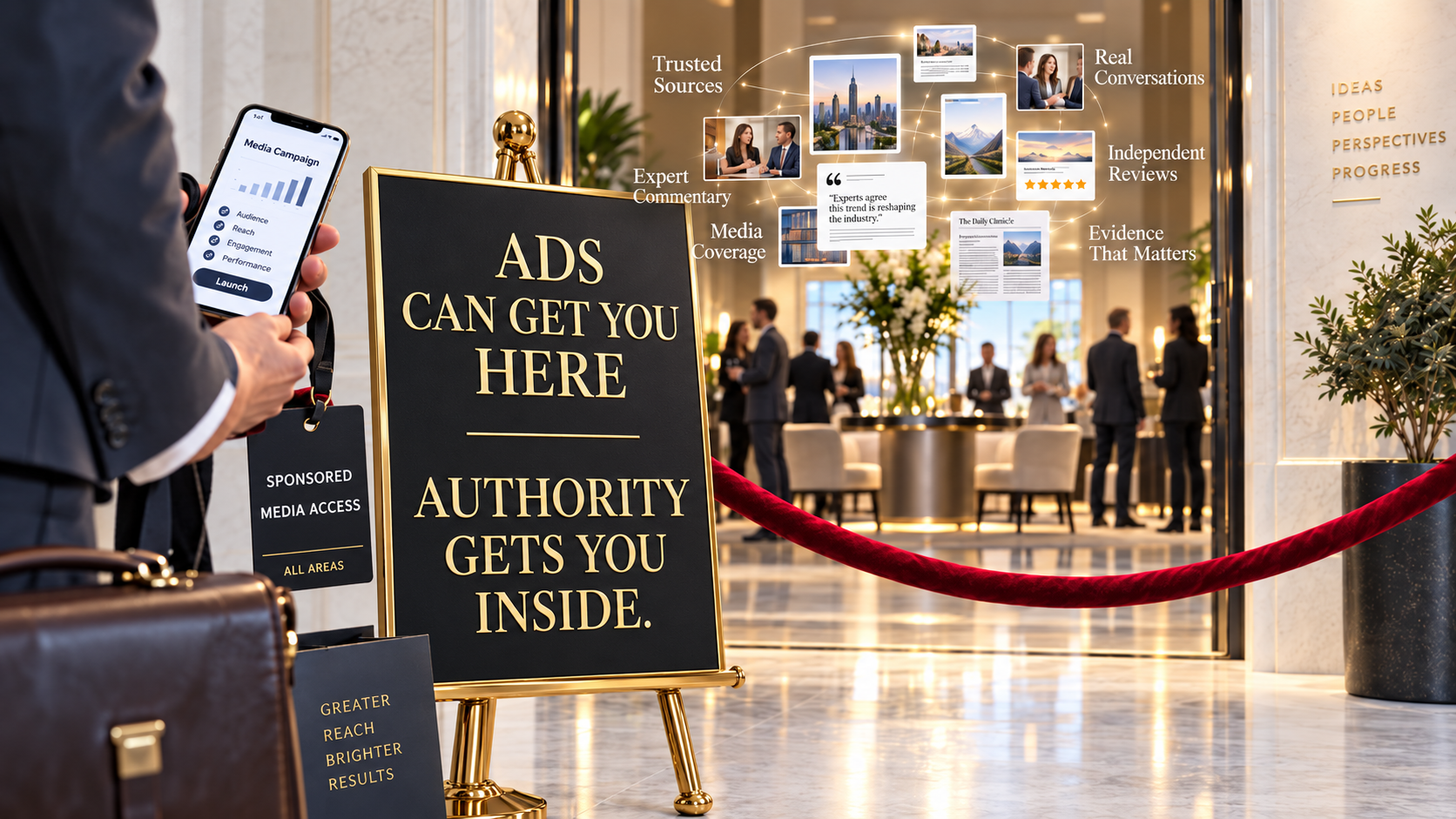
It also means looking beyond the website. Gini Dietrich’s PESO Model® brings paid, earned, shared, and owned media together as an integrated communications operating system.
In this case, owned content gives the organizer clear information. Earned coverage and independent voices add context. Shared conversations reveal questions and experiences the venue may otherwise miss. Paid media can help the right people discover it. Together, those signals help build the picture an assistant and a customer encounter.
They also have to hold up when the organizer calls. If the sales team gives a third capacity number or can’t answer the accessibility question, the problem has followed the customer right through the door.
The goal is to give AI an accurate organization to describe and a customer an experience that backs it up. Before building another campaign around that promise, it’s worth finding out what an assistant would say about the venue today.
I know it sounds like a lot, and it is, but you can get a useful first look at that picture today.
To see how AI brand discovery works for your organization, start with the question your customer would ask, rather than “What do you know about our brand?” The latter mostly tells you whether AI recognizes your name. The former shows you how it handles a decision in which you hope to be considered.
For the venue, that might mean asking more than one AI tool:
Then look beyond whether your name appears. Is the venue described accurately? Does the assistant understand the kind of event it can host? Which claims does it support with evidence, and which details are missing or outdated?
Follow the sources it provides and check them yourself. AI can misread a page or confidently repeat a bad listing. I know this is surprising, but the machines can make mistakes.
Finally, take the customer’s next step. If the assistant raises a question about capacity or accessibility, can someone resolve it on the website or with one call? Does the answer match what the sales team says?
Run the exercise with different customer needs and compare what you find. One answer cannot give you a universal ranking or an “AI visibility score.” It can show you where the organization’s story is clear, where it falls apart, and what needs attention first.
The venue that missed our organizer’s shortlist may never know about that particular search. It can still learn what a future organizer is likely to find, and decide what to do with that information.
Suppose the venue runs that exercise and finds the same concerns our organizer did.
It can clarify the capacity for each room setup, publish specific accessibility information, and find out whether the Wi-Fi complaints point to a problem that still needs fixing. Then it can make sure the website, outside listings, and sales team tell the same story.
Doing that once helps. Keeping it true takes a system: people who own the facts, a way to hear what customers are experiencing, and a regular habit of checking whether the organization’s promises still match what it delivers. That work gives the next organizer (and the assistant helping them) something more reliable to go on.
It won’t guarantee a place on every shortlist. Different customers will ask different questions, and AI will sometimes get the answer wrong. But the venue has a much better chance of being understood accurately, and of standing behind what a customer finds when they call.
The same goes for your organization. Your next customer may have formed an opinion before they visit your website or speak to your team. They may even discover you through an answer to a question that never mentioned you by name.
You may never see the moment an AI assistant puts you on the shortlist, or leaves you off it. But, you can still do the work that makes the recommendation easier to earn.