C’mon, I know you’ve been here.
Somewhere in a planning meeting, someone suggests making “effortless customer support” the centerpiece of next year’s campaign. If it’s not that, it’s something just like that.
It’s a good message, sure. Customers want it, leadership likes it, and the team can already picture the videos, customer stories, and ads.
The customer or partner support team, meanwhile, might appreciate being invited to this conversation.
Imagine that campaign moving forward. The team develops the creative, selects the channels, and builds the budget.
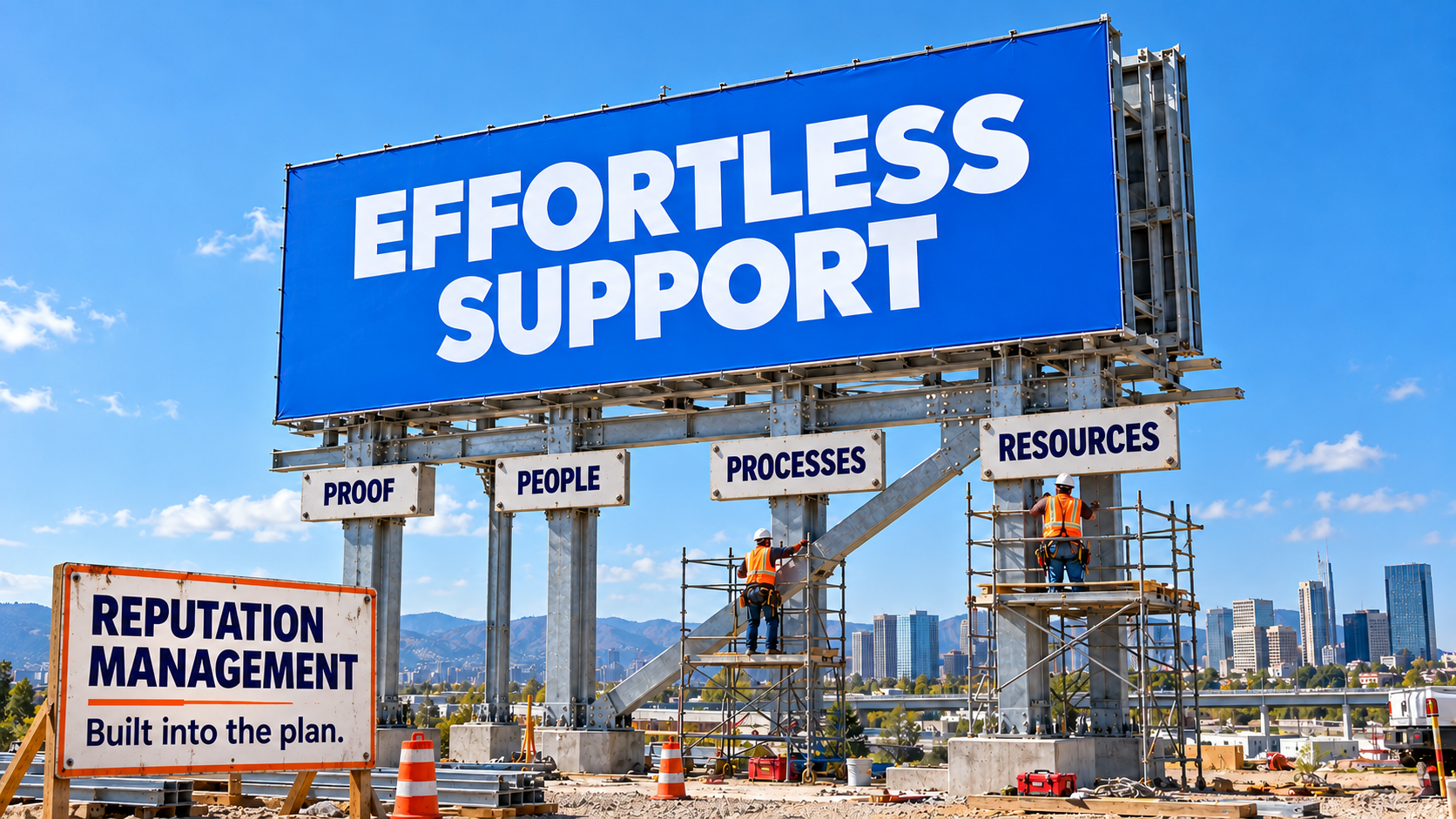
But choosing “effortless” has already created a responsibility: agreeing on what that experience means, making sure the organization can deliver it, and helping people verify the claim. Your reputation management strategy needs to account for those responsibilities while the campaign is being planned.
A prospective customer might read reviews. An existing customer might compare the supporting content with the three calls it took to resolve a problem. An employee might wonder whether anyone told marketing about the backlog.
None of that requires a crisis to call attention to it. It requires someone paying attention.
Your audience doesn’t wait for a crisis to decide whether to believe you. That’s why reputation management belongs in the conversation while you’re deciding what to say and promote. The expectations you create need to inform the resources, responsibilities, and preparation behind the campaign.
Credibility develops through the everyday experiences people have with your organization. Marketing and communications help set those expectations. Business decisions and employee actions help determine whether they’re met. The planning needs to connect those responsibilities.
With year-end approaching, teams are choosing next year’s priorities, negotiating budgets, and assembling calendars that will somehow accommodate twelve months of ambition.
This is the opportunity to build your reputation management strategy into that work: how you’ll align brand promises with business delivery, make supporting evidence accessible, and assign responsibility for keeping both connected.
The same thinking applies to next week’s announcement or next month’s launch. Before you approve the message, ask what needs to be in place for someone to believe it, and for the organization to stand behind it.
That question deserves space in the brief, time on the calendar, and money in the budget.
Let’s say that “effortless customer support” campaign does exactly what you hoped. Someone notices it and thinks, “That would be nice. Let me see if they mean it.”
Congratulations…the marketing is working. Now comes the part your click-through rate won’t explain.
That person might look at customer reviews, ask a colleague, or use an AI tool to compare your company with another provider. They’re trying to decide whether the experience you’re selling is one they can reasonably expect.
And trust matters to that decision. In Edelman’s 2026 brand research, 88% of respondents considered trusting a brand an important or critical purchase criterion, alongside quality at 89% and value at 88%.
That puts some responsibility behind the word “effortless.”
We’ve explored how to investigate what AI tells people about your organization and identify critical gaps. Those findings belong in your campaign planning. If people struggle to find current service information, or encounter recurring complaints without a clear explanation of what changed, your new message needs supporting work.
Before setting the launch date, ask: Where would someone go to check this claim, and what would help them assess it?
The answers should influence the content, resources, and preparation you schedule alongside the promotion. Remember—getting someone’s attention also gives them a reason to check your work.
If you’re at the planning table…just pause for a second.
Before anyone builds another spreadsheet, open the marketing and communications plan you already have. Pick three to five priorities and ask a simple question: What are we asking people to believe?
This is where you have to look beyond the tagline. A recruiting campaign might promise employees room to grow. A partner announcement might suggest easier access to expertise. A product launch might imply that switching providers will be painless.
For our customer support campaign, “effortless” could mean reaching a person quickly, avoiding repeated explanations, or getting a problem resolved without chasing three departments. Those are different expectations, and the team needs to agree on which ones the campaign creates.
Add that understanding to the campaign brief. For each priority, record:
If you’ve already examined whether your brand’s claims have accessible proof, bring those findings into this discussion. They should help you identify which promises need the most preparation.
This gives reputation planning a specific job within each campaign. Now you know which expectations need supporting evidence, whose involvement matters, and where preparation needs to begin.
You can’t plan to protect a reputation if you haven’t agreed on what you’re asking people to believe.
We know we can’t do this alone.
So, now invite the people responsible for delivering those promises into the conversation, so you can give them enough time to influence the plan. Yes, it’s ok that others influence your marketing or communications strategy!
Asking customer support to review “effortless” two days before launch, with the ads already purchased, is a particularly creative definition of collaboration.
For our campaign, the support team might explain that customers reach someone quickly, but resolving complex problems requires several handoffs. Operations might have an improvement underway, with a timeline that extends beyond the proposed launch.
That information should change a planning decision.
Perhaps the organization needs to fix the handoffs before promoting the experience. Perhaps the campaign should emphasize access to knowledgeable people, with evidence to support it. Or perhaps the launch should move until the promised improvement is available.
To help the process, work through three questions with the teams involved:
Record the decisions and dependencies in the campaign plan. If a claim depends on a system upgrade or additional staffing, those milestones belong alongside the creative deadlines.
This is where trust becomes an organizational responsibility. Communications helps surface the gap and explain the experience accurately. The people who control that experience need the authority and resources to improve it.
Once you know what the organization can deliver, plan how people will verify it.
This is the critical part, especially with AI search and supporting your brand’s AI visibility. Your content calendar should make room for the questions someone asks after the headline gets their attention.
“What happens if my problem isn’t resolved?” deserves an answer before someone asks it underneath your launch post.
This is where the PESO Model®, developed by Gini Dietrich and Spin Sucks, helps connect paid, earned, shared, and owned media around a common purpose. For our support campaign, that could look like:
Consider all four media types and choose their roles based on where your audience looks for information. Then connect the work: a documented improvement might support a media conversation, an employee explanation, and a paid campaign.
The promise and the proof need to travel together. Your plan should make that possible wherever someone encounters the campaign.
The creative is approved, the landing page has the critical foundation, and the posts are scheduled.
Before everyone declares victory, can the people representing your organization explain what you’ve promised? Remember how important experts and trust signals are to AI visibility? This is where it comes into play for your campaign.
“We sent them the deck” is doing a lot of heavy lifting in some launch plans.
Your best bet is to build a short readiness check into the campaign approval process. Confirm that the supporting information is accurate and accessible, the people answering questions know where to find it, and someone has responsibility for keeping it current.
Then test it with an ordinary customer question.
For our support campaign: “You say this is effortless. What happens if the first person I reach can’t solve my problem?”
Ask a frontline employee to walk through the answer using the resources prepared for launch. Can they explain the next step? Does the website support that explanation? If something needs clarification, can they reach someone authorized to provide it?
You’ve already considered how to assign responsibility and test the handoffs. Apply that preparation to the campaign before people encounter it.
Put any missing resources, unclear approvals, or training needs into the launch schedule, with an owner, deadline, and backup where needed. Give someone authority to confirm that those dependencies are complete before promotion begins.
This exercise should reveal whether the plan works beyond the people who wrote it.
Of course, all of this takes time.
Someone has to verify the claims, document the results, prepare employees, and keep the information useful after launch.
If the budget covers six videos and a paid campaign but assumes that work will happen through “existing capacity,” we should probably discuss what existing capacity actually means.
Usually, it means someone named Sarah is about to have a terrible month. Sorry Sarah!
Build those responsibilities into the campaign’s scope while you’re allocating resources. For our support campaign, that means accounting for the service team’s input, the creation of supporting resources, employee preparation, and the time needed to maintain accurate information.
Each activity needs an owner, a deadline, and the capacity to complete it. Include operational dependencies in the shared plan, even when another department controls the funding.
The PESO Model® helps connect that investment across channels. One verified set of service results can inform website content, expert commentary, employee resources, and advertising. Plan that shared foundation before each team commissions its own version.
Agree on what progress looks like, too: claims substantiated, resources ready, employees prepared, and identified gaps addressed. Schedule reviews alongside campaign performance to check that the evidence still supports what you’re promoting.
That puts your reputation management strategy into the same decisions governing campaign execution. If the work has no time, owner, or budget, you haven’t planned for it.
Go back to that planning meeting.
Someone suggests “effortless customer support,” and this time, the next question is: “What needs to be in place for us to stand behind that?”
Now you have a conversation worth having before anyone buys the ads.
Start with one upcoming campaign. In the existing brief, write down the promise, the evidence supporting it, the experience required to deliver it, and the questions people will reasonably ask. Then identify who owns the preparation and give that work deadlines and resources.
If you’re still unsure where the gaps are, start by investigating what people may already be hearing about your organization. Bring what you learn back to the plan.
Use that first campaign to put your reputation management strategy into practice. Carry the same preparation into the next announcement, recruiting push, or leadership initiative, and make it part of how work gets approved.
Year-end planning gives you an opportunity to put that system in place while priorities and budgets are still being decided. Next week’s campaign gives you a reason to start sooner.
Your reputation management campaign has already started. Every promise you promote gives people something to evaluate.
If you’re budgeting to make a promise louder, budget to make sure the organization can keep it.